
Exploring the potential of pectin as a sustainable substrate for yeast biotechnology
SUPERVISOR: Brigitte GASSER
Background.
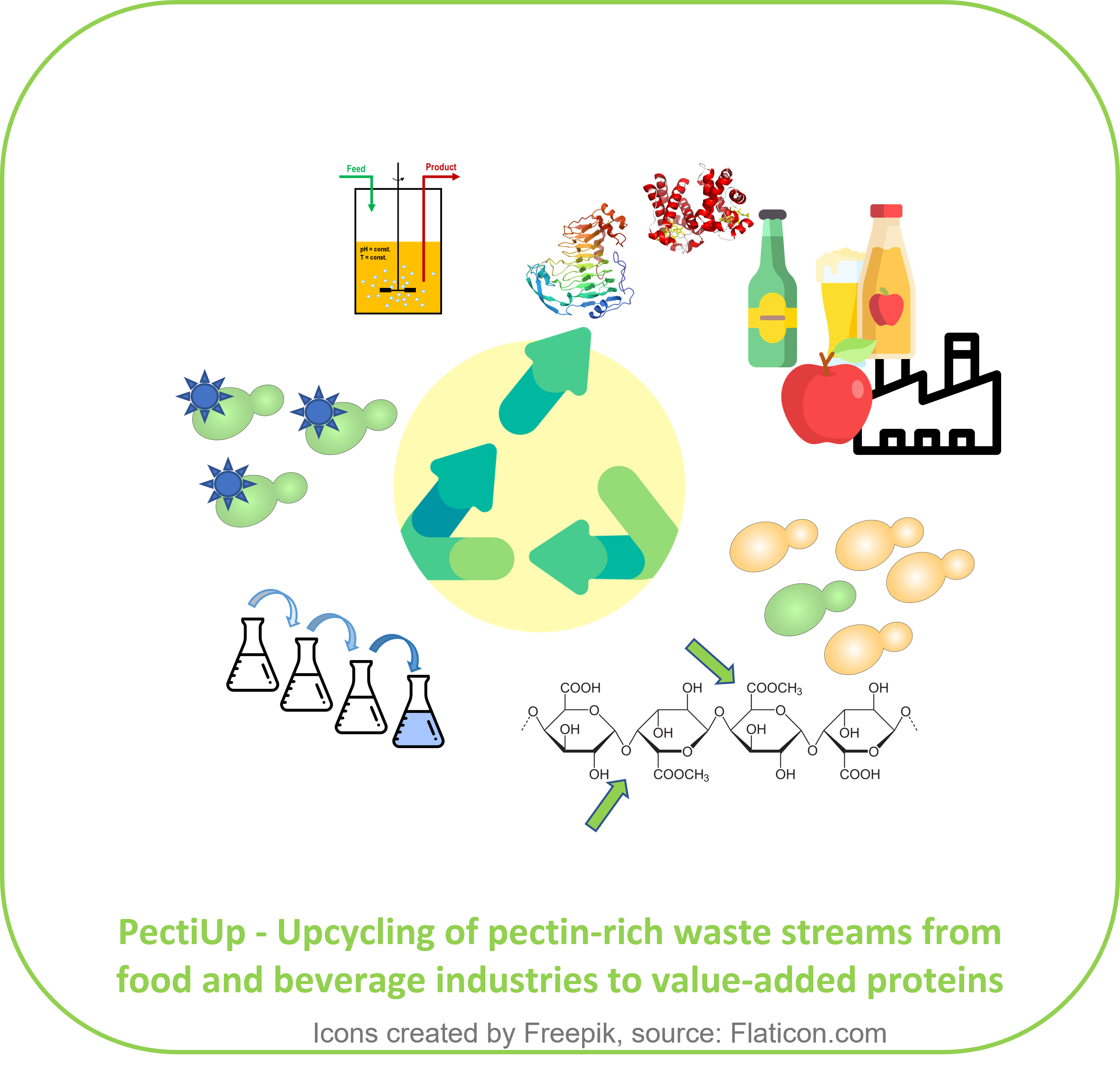
Biogenic waste is a key resource for circular bioeconomy. Upcycling is the process of transforming by-products or waste materials into new materials or products of greater quality. The PhD project PectiUp aims to upcycle pectin-rich waste streams from food-industry into value-added proteins intended for food applications. Apple pomace and brewer´s spent grain (BSG) were chosen as locally and globally relevant waste streams.
Methods & Expected Outcomes.
Methylotrophic yeasts of the genus Komagataella will be examined for their ability to metabolize pectin, a major component of plant cell walls and the world´s most abundant natural source of methanol. After identifying and characterizing the genes and enzymes involved in pectin metabolism, the best-performing strains will then undergo adaptive laboratory evolution to enhance pectin utilization, followed by whole-genome sequencing to uncover the genetic basis of improved traits.
In parallel, pectin methylesterase will be exploited to evolve and select for advanced variants of Komagataella´s methanol-based expression system, that is underlying the established use of Komagataella phaffii (syn Pichia pastoris) as host for recombinant protein production.
To close the circular bioeconomy loop, the advanced PectiUp strains will then be used to produce value-added proteins from these waste streams. Pectinases, the industrially most relevant class of food-processing enzymes and a flavor protein will be used as examples for valuable proteins intended for applications in food manufacturing and food products.
The project “PectiUp - Upcycling of pectin-rich waste streams from food and beverage industries to value-added proteins” is funded by the Christian Doppler Forschungsgesellschaft as “CDG PhD thesis for Energy transition and Circular economy” and will be carried out at the BOKU - Institute of Microbiology and Microbial Biotechnology.