
Cellular Cocktails: Artificially creating organelles for improved oxidative protein folding
SUPERVISOR: Brigitte GASSER
Background.
Artificial organelles, such as synthetic ER-mimetic environments, have the potential to address current challenges in protein folding, enzyme production, and the sustainable synthesis of key proteins. Design and development of artificial organelles in yeast cells will enable novel solutions for production of recombinant proteins of high societal impact and high demand. Oxidative protein folding is located within the endoplasmic reticulum (ER) of eukaryotic cells. Strikingly, even in single cell eukaryotes such as yeast, several functionally redundant isoforms exist for each step. So far, their distinct functions and substrate specificity has been studied in deletion mutant cells, however, these studies are limited as during the lack of one isoform the cells compensate by the other isoforms.
Aims.
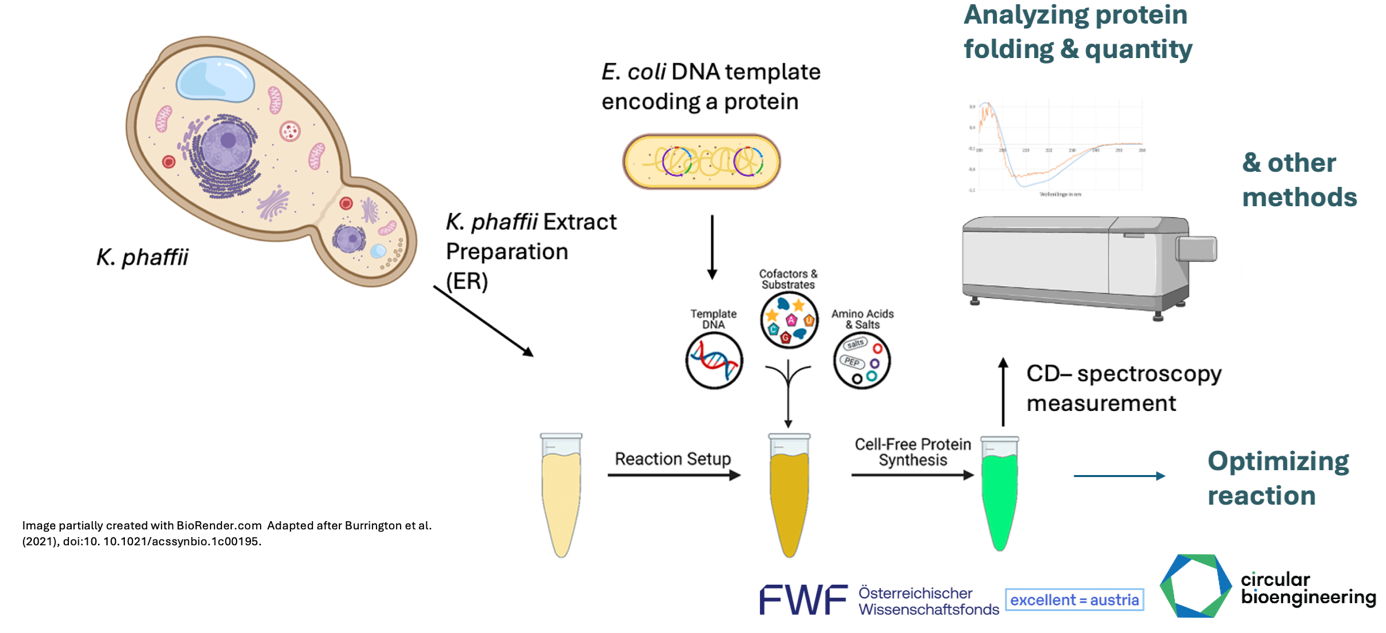
The primary goal of this PhD project that is embedded within the Cluster of Excellence “Circular Bioengineering” (https://www.circularbioengineering.at/) is to create a synthetic yet contextualized ER mimetic environment in a cell-free setup. Furthermore, the focus is to investigate the individual functions of redundant eukaryotic oxidative protein folding catalysts and define their specific requirements in substrate folding kinetics and transport. Finally, the project aims to design and develop tailored synthetic ER folding modules in vivo to meet the demands for the most effective folding catalysts identified.
Overall, the project aims to advance the understanding of oxidative protein folding mechanisms using synthetic mini-compartments and to develop novel approaches for engineering and production of proteins and enzymes.
Methods.
• Genetic engineering of yeast (especially Komagataella phaffii)
• Plasmid construction, cloning by using state-of-the-art cloning methods (such as CRISPR/Cas9, Golden Gate Assembly)
• Heterologous protein production
• Protein purification (e.g., affinity chromatography, FPLC)
• SDS-PAGE, Western blotting
• Enzyme activity assays
• Biophysical characterization (e.g., CD, fluorescence, stability assays)
• Analysis of protein folding kinetics and oxidative folding pathways
• In vitro transcription–translation systems
• Engineering ER-like environments in cell-free systems
• Studying folding catalysts in controlled conditions