
Elucidating the biological function of plant rhomboid-like proteins
SUPERVISOR: Richard STRASSER
Background.
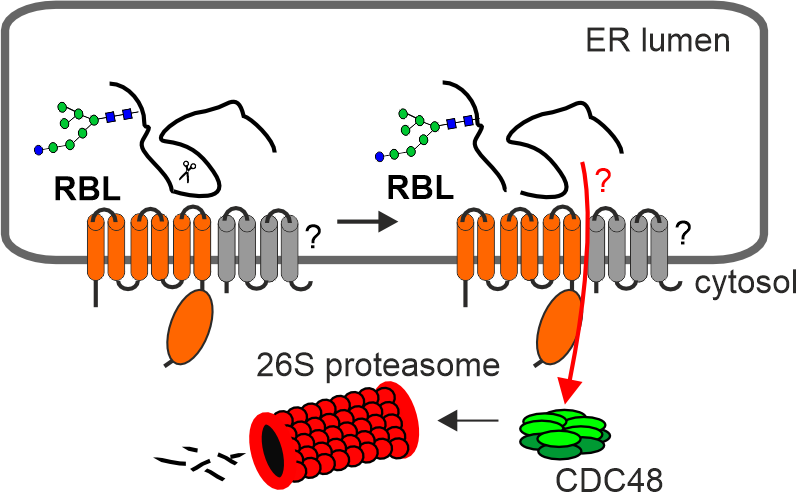
The rhomboid family of proteins is diverse, comprising polytopic membrane proteases and pseudoproteases that perform a wide range of biological functions in all kingdoms of life. This family consists of different clans, including enzymatically active intramembrane proteases and inactive, non-protease rhomboid proteins, such as the more distantly related DERLINs. Members of both clans are involved in regulated protein degradation and ER-associated degradation (ERAD) of aberrant proteins. Rhomboid family proteins are highly conserved in plants and can be found in various cellular compartments, such as the endoplasmic reticulum (ER), Golgi apparatus, mitochondria, chloroplasts, and the plasma membrane. However, their involvement in specific ERAD steps and their biological function in plants is largely unknown.
Aims.
We hypothesise that specific rhomboid family proteins play a role in the ERAD of different misfolded glycoproteins in plants, by facilitating retrotranslocation from the ER to the cytosol and cleaving specific protein domains. To gain mechanistic insights into the molecular processes that lead to the degradation of misfolded glycoproteins in the ER, the function of so far uncharacterised rhomboid family proteins, from Arabidopsis thaliana plants will be characterised. The role of these proteins in the degradation of defined ERAD substrates, which differ in domain composition, membrane anchoring, number and position of N-glycosylation sites will be elucidated.
Funding
FWF-stand-alone project PAT1435625 “Plant rhomboid family proteins involved in ERAD”