
Towards the plant-based production of a highly active tetrameric human esterase with complex sialylated N-glycans
SUPERVISOR: Richard STRASSER
Background.
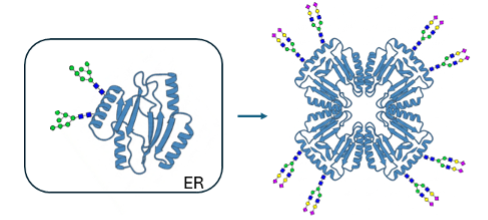
Engineered human esterases hold significant promise as prophylactic and therapeutic enzymes, particularly as bioscavengers for protection against toxic compounds. These enzymes are highly glycosylated, and their glycosylation patterns play a crucial role in proper protein folding, structural stability, solubility, circulation time, and overall therapeutic performance. Consequently, the development of recombinant esterases with tailored glycosylation profiles may help address the growing demand for these enzyme-based therapeutics and bioscavengers. Achieving this requires advanced recombinant production platforms capable of generating human esterases with authentic glycosylation profiles and physicochemical and pharmacokinetic properties comparable to those of their plasma-derived counterparts.
Aims.
This project aims to produce a highly active, tetrameric recombinant human esterase bearing complex, sialylated N-glycans using a plant-based expression platform. To accomplish this, glycan-processing pathways and cellular trafficking mechanisms will be engineered to optimize protein processing, secretion from the endoplasmic reticulum (ER) and glycan processing. The resulting glycoengineered esterase is expected to exhibit enhanced stability, bioavailability, and therapeutic efficacy, thereby supporting the development of plant-produced recombinant esterases as viable alternatives to plasma-derived enzymes.
The recombinant esterase will be produced by agroinfiltration of Nicotiana benthamiana leaves, using glycoengineered plant lines generated by RNAi, CRISPR-Cas9 genome editing and the co-expression of enzymes of the sialylation pathway. The protein will then be purified by size-exclusion chromatography (SEC), and characterized in terms of oligomeric state, N-glycan composition and enzymatic activity.