
Biomimicking mammalian ER in plants
SUPERVISOR: Eva STÖGER
Background.
The endoplasmic reticulum (ER) is the central site for the biosynthesis, folding and processing of secretory proteins. In mammalian secretory cells, an expanded rough ER with sheet-like morphology supports high biosynthetic activity. In contrast, the ER in plants features a cortical network with a high proportion of tubules, which limits their capacity to produce complex recombinant proteins for pharmaceutical or industrial use.
Objective.
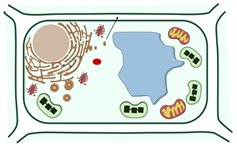
This project aims to redesign the plant ER by introducing synthetic ER-shaping and scaffolding proteins to mimic the specialized architecture of mammalian secretory cells. By combining synthetic biology and advanced imaging, we seek to enhance ER functionality for biotechnological applications using plant-based production systems.
Approach.
We plan to apply principles of synthetic biology to explore if mammalian proteins, or hybrid versions adapted to plant systems, can induce morphological changes of the ER and simultaneously recruit key biosynthetic components, including ribosomes, translocons, and chaperones. An important part of this work will be to evaluate whether these synthetic modifications improve protein folding efficiency and alter post-translational modifications such as glycosylation patterns or proteolytic processing. The expression of these proteins in wild-type and ER-engineered Nicotiana benthamiana will be achieved via transient agroinfiltration, enabling rapid functional assessment.
Methods.
We will integrate modular synthetic biology tools with advanced cell biology and microscopy. CRISPR/Cas9-based genome editing will be used for precise modifications and combinatorial expression of ER sheet-stabilizing and -modulating proteins in Nicotiana benthamiana. This will include the design of synthetic domains to manipulate ER functions or trafficking. To track morphological changes, we will use various electron microscopy techniques, including scanning electron microscopy, conventional transmission electron microscopy, and correlative microscopy. Volume EM methods such as electron tomography and serial block face-SEM will be used to obtain 3D insights into ER structure and its spatial relation to other organelles. Lipidomics will be performed on isolated endomembrane compartments from selected engineered plants to assess changes in membrane composition and homeostasis.